Find Portable CE LNG Polishing Machine for Metal, LPG, Marble
Source 30 portable CE LNG polishing machines for metal sheet, LPG cylinder, and stone processing. Compare specifications from manufacturers in China to find the right solution for your production needs.
Key considerations
Products List


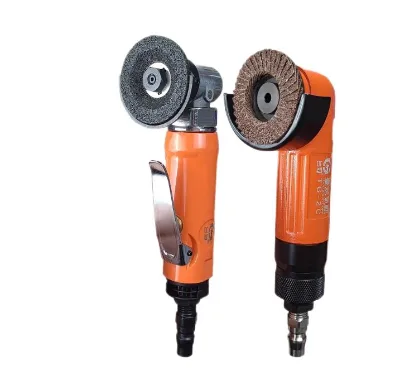


Comprehensive Sourcing Guide
Strategic Sourcing Guide for Portable CE LNG Polishing Machines
Understanding the Product Landscape and Core Specifications
When sourcing a portable CE LNG polishing machine, buyers must first navigate a market where terminology often blends general industrial polishing with specific liquefied natural gas (LNG) cylinder processing requirements. The core keyword suggests a machine capable of handling metal sheets or specific cylinder components with a focus on portability and compliance with European standards. Based on available market data, the term "LNG" in this context frequently refers to production lines dedicated to LPG or LNG cylinder manufacturing rather than a specific polishing medium. The observed product models in this category include identifiers such as JY-LNG, JY-YT, and XYD-LNG, indicating a specialized subset of industrial machinery designed for the automotive and energy sectors.
A critical observation in the current supply chain is the diversity of machine configurations. While some units are explicitly labeled as "Polishing Machines" with models like SF-3000 or SF3000, others are described as part of a "LPG Cylinder Production Line." This distinction is vital for procurement accuracy. The technical specifications for these machines vary significantly. For instance, power consumption for disc grinding and polishing units can range from 5.5/7.5kw for the main motor to a total power of 6/8kw. Water consumption is another key metric, with some models operating at a rate of 1 M3/H, suggesting wet grinding methods are common for dust control and surface finish quality.
The physical dimensions and weight of these units also present a wide range. Observed standards for machine footprints include dimensions such as 308015001600mm and 3800x1650x1800mm, with weights reaching up to 800kg. This variance directly impacts the "portable" aspect of the keyword. A machine weighing 800kg with a footprint of nearly four meters in length requires significant logistical planning, even if it is marketed as a portable unit within a factory setting. Buyers should verify the actual mobility features, such as caster wheels or lifting points, rather than assuming portability based solely on the product name. The voltage requirement is consistently observed at 380V, which is standard for heavy industrial equipment in many regions but requires specific electrical infrastructure planning.
Compliance, Certification, and Safety Standards
Compliance is a non-negotiable pillar in the procurement of industrial machinery, particularly when the keyword includes "CE." The presence of CE and ISO certifications in the product data confirms that many suppliers in this sector adhere to European safety and quality directives. These certifications are not merely marketing labels; they indicate that the machinery has undergone specific risk assessments and meets the essential health and safety requirements for operation within the European Economic Area.
However, buyers must exercise caution when interpreting these certifications. The data shows that while CE and ISO are listed, the specific standard numbers or the scope of the certification (e.g., whether it covers the entire production line or just the polishing unit) are not always detailed in the initial product listing. For a machine labeled as a "Polishing Machine" with a model number like SF-3000, the CE mark implies compliance with machinery directives, but the buyer must verify that the specific configuration ordered matches the certified design. The "Nude Packing" or "Plastic Packing" options mentioned in the data suggest that the packaging itself may not provide the full protective certification context, necessitating a review of the technical file provided by the manufacturer.
Furthermore, the origin of the machinery is predominantly China (Mainland) and specific regions like Quanzhou. While this does not negate the validity of CE certification, it places the burden of verification on the buyer to ensure that the certification is current and issued by a recognized Notified Body. The "Flexible Production" and "Lean Production" attributes observed in the data suggest that these machines are designed for adaptable manufacturing environments, which often requires compliance with dynamic safety standards regarding operator interaction and emergency stops. Buyers should request the full technical documentation, including the Declaration of Conformity, to ensure that the "CE" status applies to the specific voltage (380V) and power configuration they intend to purchase.
Cost Drivers and Pricing Dynamics
The pricing landscape for portable CE LNG polishing machines is characterized by extreme volatility, with observed ranges spanning from $1 to $50,000. This vast disparity is not indicative of a single product tier but rather reflects the difference between a small, manual disc grinder and a comprehensive, automated production line. A unit priced at the lower end of this spectrum is likely a basic polishing tool or a single station within a larger line, whereas the upper end represents a fully integrated system with automation, digital displays, and comprehensive after-sales support.
Several factors drive these costs. First, the level of automation is a primary determinant. The data indicates a split between "Manual" automation and "Comprehensive" automatic production lines. A machine with a digital display and automatic lifting strokes of up to 470mm will command a higher price than a manual unit. Second, the customization options significantly influence the final cost. The "Customization: Available" attribute suggests that buyers can tailor the machine's color, dimensions, or functional scope, which invariably adds to the base price. Third, the complexity of the application matters. A machine designed specifically for "LPG Cylinder Production" involves more rigorous engineering than a general-purpose "Metal Sheet" polisher, leading to higher manufacturing and certification costs.
Buyers must also consider the "After-Sales Service Provided" as a cost driver. The availability of engineers to service machinery overseas is a premium feature that is often bundled into the initial purchase price or offered as a separate service contract. While the MOQ (Minimum Order Quantity) is observed to be low, ranging from 1 to 2 units, this does not necessarily correlate with lower unit costs for complex systems. The "Seaworthy" or "Carton Protection in Plywood Cage" packing options also add to the logistics cost, which is often a separate line item but essential for protecting high-value machinery during transit.
Typical Applications and Operational Scope
The operational scope of these machines is diverse, ranging from general metal sheet polishing to specialized cylinder production. The "Application" attribute in the data explicitly lists "Metal Sheet," "Marble, Granite," and "LPG." This indicates that the same core technology—often a disc grinding or polishing mechanism—can be adapted for different industries. For the LNG/LPG sector, the machine is likely used for the surface finishing of gas cylinders, ensuring a smooth, safe surface that can withstand high pressure and prevent stress concentrations.
The "Grinding Method" is observed as "Wet Grind," which is critical for applications involving stone or metal where dust generation must be minimized. The "Water Consumption" of 1 M3/H supports this, indicating a need for a water supply system at the installation site. The "Type for Grinding Machine" is identified as a "Disc Grinding Machine," which is suitable for flat surfaces or curved cylinder bodies depending on the fixture used. The "Max. Spindle Lifting" of 80mm and "Max. Lifting Stroke" of 470mm suggest that these machines are capable of handling varying thicknesses and sizes of workpieces, making them versatile for batch production.
In the context of "Parts Production Line," these machines often serve as a critical step in a larger workflow. The "Rhythm: Non Flow Production Line" attribute suggests that the machine may operate in a batch mode rather than a continuous conveyor system, which is typical for custom or semi-custom production environments. The "Color: Black and White (Can Be Customized)" attribute, while seemingly aesthetic, may also relate to safety markings or brand identification on the machine casing. Buyers should align the application requirements with the machine's specific capabilities, ensuring that the "Precision" level meets the tolerances required for their specific end-product, whether it is a high-pressure gas cylinder or a decorative stone surface.
Supplier Evaluation and Quality Control Protocols
Evaluating suppliers for portable CE LNG polishing machines requires a rigorous approach, particularly given the concentration of manufacturers in China (Mainland) and specific hubs like Quanzhou. The "Manufacturer" attribute lists "Xyd," but buyers should not rely on a single brand name. Instead, the focus should be on the supplier's ability to provide verifiable proof of the "CE" and "ISO" certifications. A reputable supplier will provide the full technical file, including risk assessment reports and compliance declarations, rather than just a certificate copy.
Quality control should be a collaborative process. The "Automatic Production Line: Comprehensive" attribute implies that the machine is part of a system that requires precise calibration. Buyers should request factory acceptance tests (FAT) to verify the machine's performance before shipment. Key parameters to verify include the "Power of Main Motor" (5.5/7.5kw), the "Total Power" (6/8kw), and the stability of the "Digital Display" during operation. The "Weight" of 800kg and the "Gyro Radius" of 3000 are physical constraints that must be validated against the supplier's shipping and installation plans.
The "Sample Type: Solidity" and "Environment: Normal Pressure and Temperature" attributes suggest that the machine is designed for standard industrial environments. However, buyers should verify the machine's performance under the specific conditions of their own facility, including voltage stability and ambient temperature. The "Transmission Type: Flexible" indicates a design that accommodates various operational loads, but the durability of this transmission system should be tested. Suppliers who offer "Engineers Available to Service Machinery Overseas" provide an additional layer of quality assurance, as they are committed to resolving issues that may arise post-installation.
Long-Term Procurement and Maintenance Considerations
Long-term procurement success depends on more than just the initial purchase price; it hinges on the total cost of ownership and the availability of support. The "After-Sales Service Provided" is a critical factor. Machines with complex automation and digital displays require specialized maintenance. Buyers should ensure that the supplier provides a comprehensive maintenance manual and training for local operators. The "Customization: Available" feature also implies that spare parts may need to be custom-made, so the supplier's ability to source and deliver these parts quickly is essential.
The "Production Scope: Parts Production Line" suggests that the machine is part of a larger ecosystem. Buyers should consider the compatibility of the polishing machine with upstream and downstream processes. The "Rhythm: Non Flow Production Line" indicates that the machine may require manual intervention or batch handling, which impacts labor costs and throughput. The "Water Consumption" of 1 M3/H is a recurring operational cost that should be factored into the budget. Additionally, the "Color: Black and White (Can Be Customized)" option may affect the resale value or the machine's integration into a specific factory aesthetic, which could be a consideration for long-term asset management.
Finally, the "Standard" dimensions and "Packing" methods (Seaworthy, Carton Protection in Plywood Cage, Box) are crucial for logistics planning. The "Location: China (Mainland)" and "Quanzhou, China" origins mean that shipping times and import duties will vary based on the buyer's location. Buyers should plan for lead times that account for the "Seaworthy" packaging requirements and any potential delays in customs clearance. By focusing on these long-term factors, buyers can ensure that their investment in a portable CE LNG polishing machine remains productive and efficient throughout its lifecycle.
FAQs
What certifications do portable ce lng polishing machines have?
These machines typically hold CE and ISO certifications. Buyers should verify that the specific configuration matches the certified design before purchase.
How is the voltage requirement defined for these units?
The standard voltage requirement is consistently 380V. This is typical for heavy industrial equipment and requires specific electrical infrastructure planning at the installation site.
Can buyers customize the color and dimensions of the machine?
Yes, customization is available for features like color and dimensions. Buyers should note that customizing these attributes often adds to the base price of the unit.
What is the typical weight and packing method for these machines?
Units can weigh up to 800kg and are packed in carton protection within a plywood cage or seaworthy packaging. This ensures safety during transit for heavy industrial units.
Which application areas are supported by these polishing machines?
Applications include metal sheet polishing, LPG cylinder production, and marble or granite finishing. The specific grinding method is often wet grind to control dust effectively.
Do suppliers provide after-sales service for overseas machinery?
Yes, engineers are available to service machinery overseas. This premium feature is often bundled into the initial purchase price or offered as a separate service contract.
What is the range of minimum order quantities for these products?
The minimum order quantity ranges from 1 to 2 units. This low threshold allows buyers to purchase single units or small batches without excessive volume commitments.